My plants 🌱
∙ Life
I have plants at home, and some of them even have names, but I always doubt how I should care for them and where to put the pot. I don’t even remember all the species, so I’ve decided to put them all on one page and write a small note for each.
Orchid
- Wiki: Phalaenopsis
- From: Our neighbour Kathrin
- Water: Once a week in summer, every 10-14 days in winter. Soak the pot in room-temperature water for 10-15 minutes, then let it drain fully. Water when the roots turn silvery-grey, not when they are still green.
- Light: Bright indirect light. An east-facing window is ideal, no direct midday sun.
- Humidity: 50-70%. A tray with wet pebbles under the pot helps in winter.
- Toxic: Non-toxic to cats and dogs
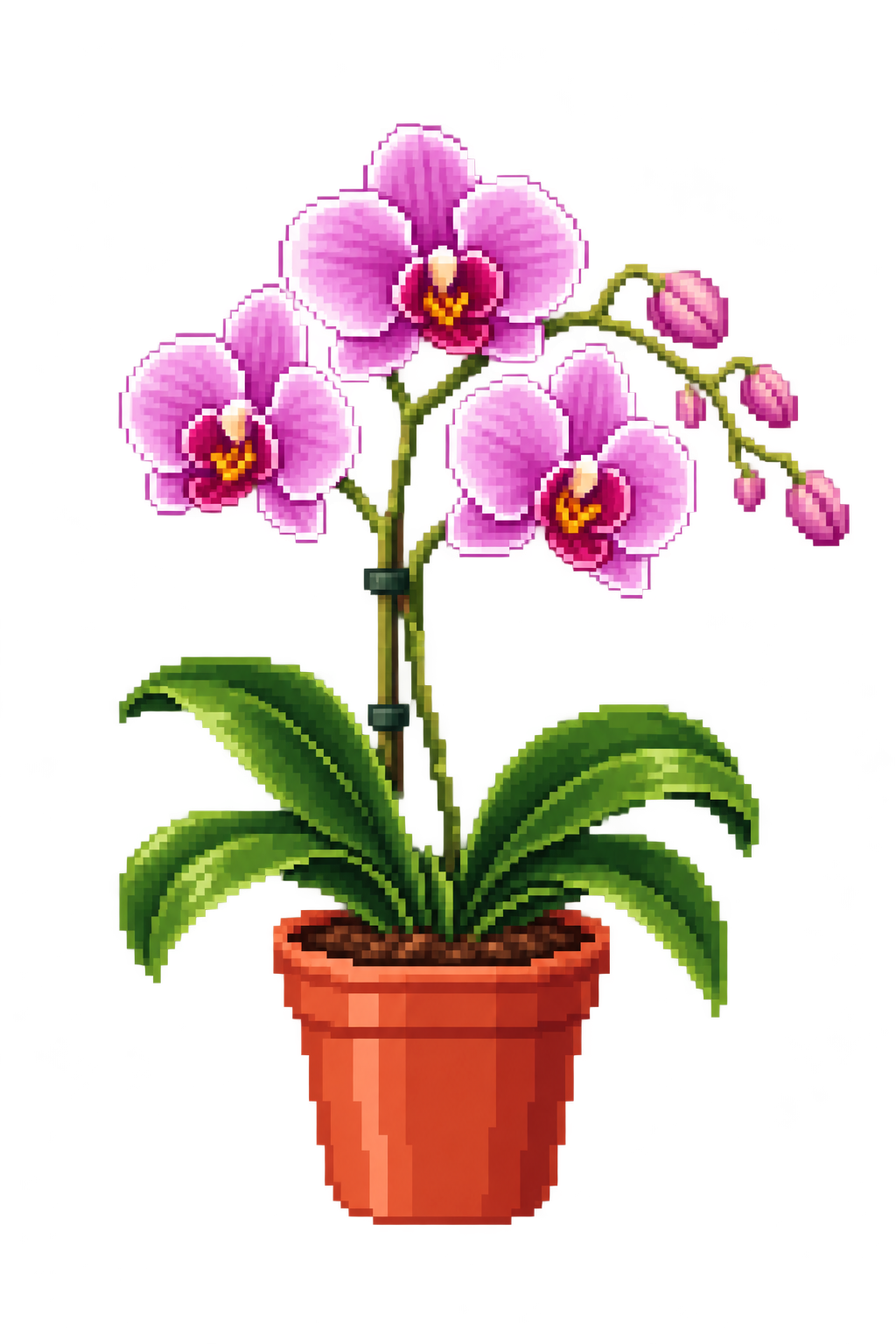
Our FIRST plant in the new apartment. Here’s the story. I was away on a work trip, and Oleg stayed home and met the neighbour from the second floor. She was so glad to have new neighbours that she bought us an orchid and left it with a note saying “For Oleg”. I was jealous: where was my name? Joking. She is a great woman, and we are good neighbours now. She gives us organic food whenever she “ordered too much for them”. She also has two adorable King Charles spaniels!
After a year, the orchid outgrew its pot so I bought a new one, can recommend.
Kentia palm
- Wiki: Howea forsteriana
- From: tuincentrum.nl
- Water: Once every 1-2 weeks, when the top few centimetres of soil are dry. Doesn’t like sitting in water.
- Light: Bright indirect light. Tolerates shade better than most palms, but burns in direct sun.
- Humidity: 50-60%. Brown leaf tips usually mean the air is too dry.
- Toxic: Non-toxic to cats and dogs
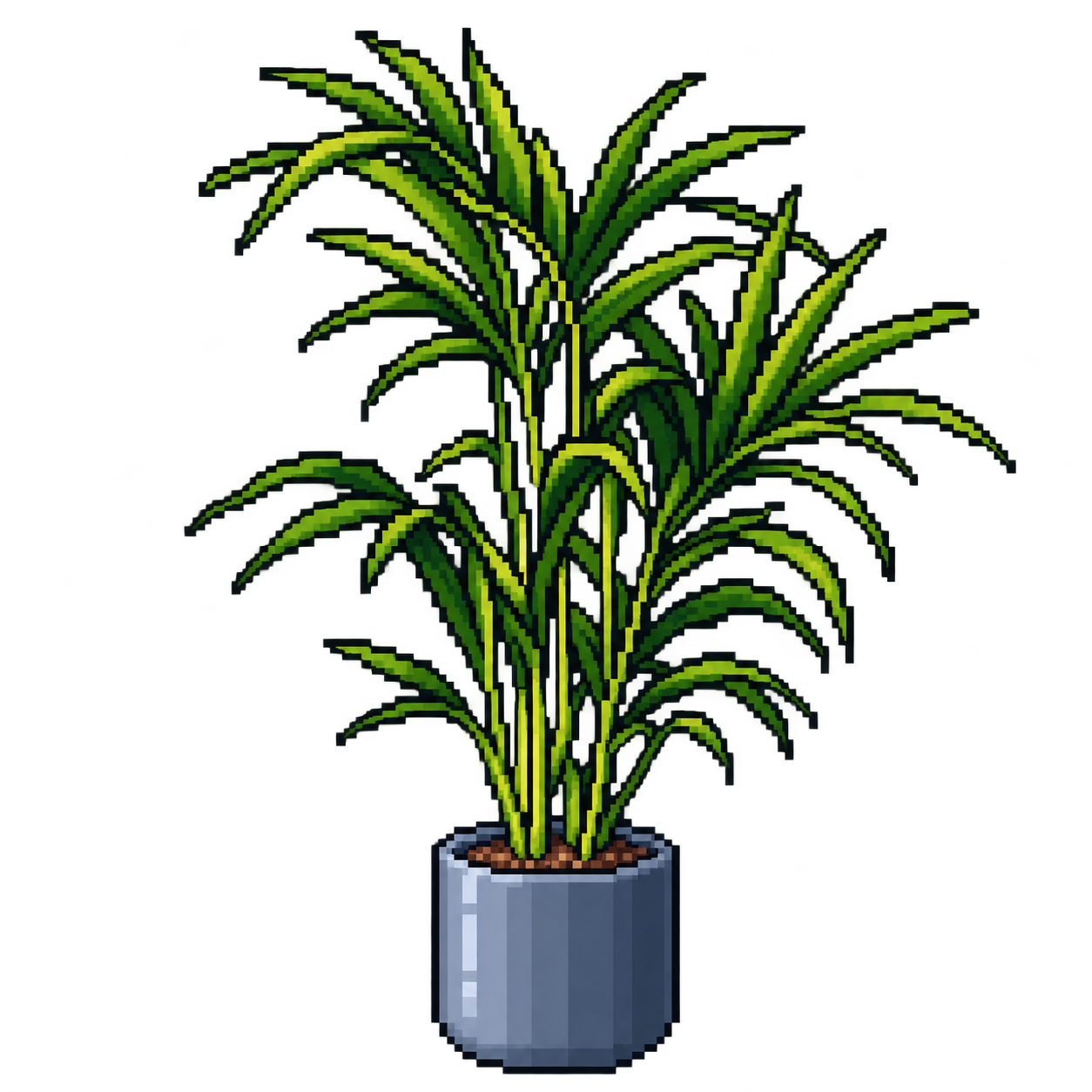
This plant initially lived in our bedroom, but the curtains there were closed almost all the time, so two of its fronds (ветви с листьями) started to dry out. Then I moved it to the study, which seems to have helped: new leaves appeared. But when they unfurl (разворачиваться), they are covered with a white web, which I can’t explain and which is hard to remove.
Schefflera arboricola
- Wiki: Heptapleurum arboricola
- From: tuincentrum.nl (*not exactly this one)
- Water: Once every 1-2 weeks, let the top half of the soil dry out in between. Drops leaves if overwatered.
- Light: Bright indirect light.
- Humidity: 40-60%, average room humidity is fine.
- Toxic: Toxic to cats and dogs (calcium oxalate crystals), causes mouth irritation and drooling.
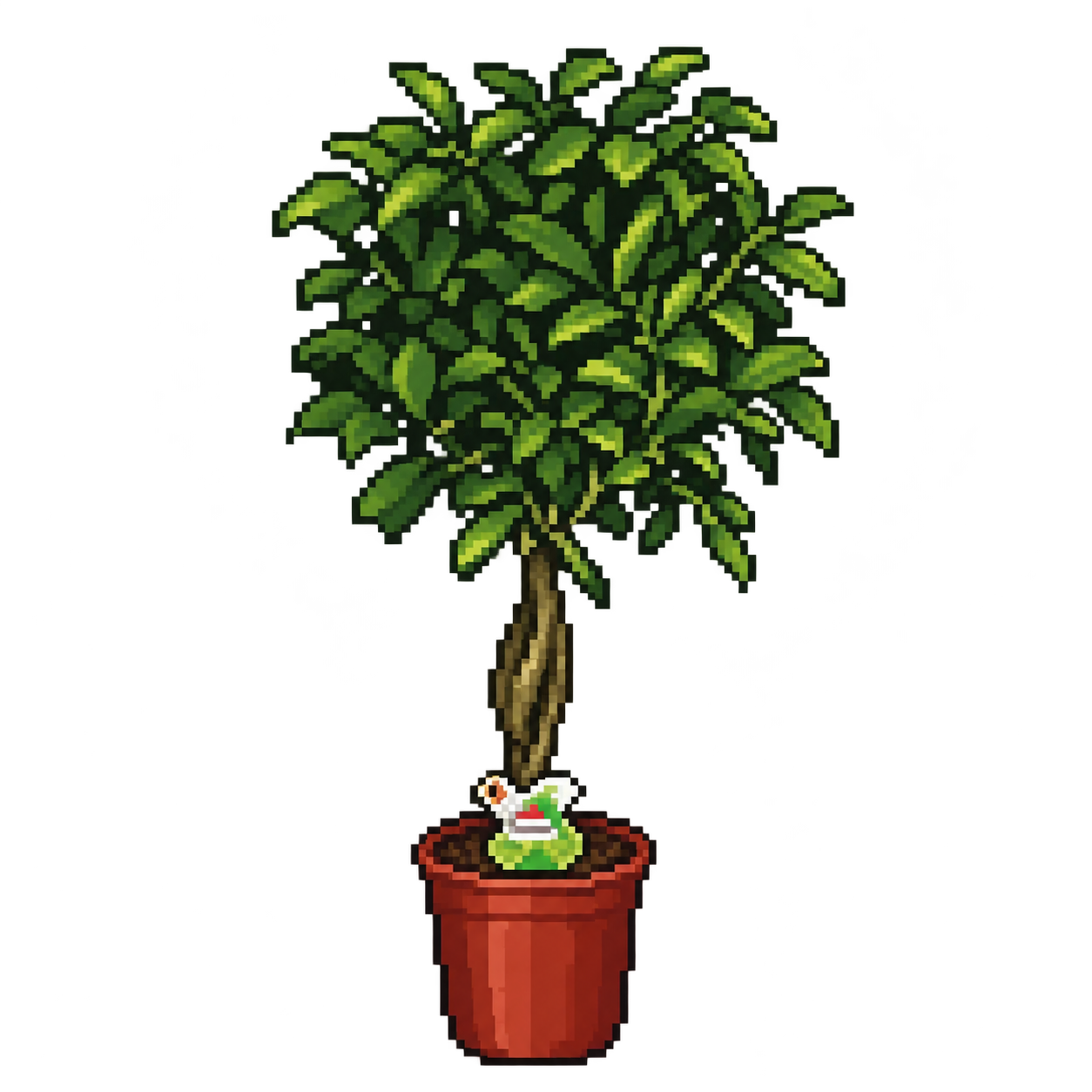
There was one in our first flat in Amsterdam, and I think that’s why we decided to buy it. It doesn’t grow very fast, though.
Ficus elastica ‘Robusta’
- Wiki: Ficus elastica
- From: tuincentrum.nl (*not exactly this one)
- Water: Once every 1-2 weeks, when the top 2-3 cm of soil are dry. Less in winter.
- Light: Bright indirect light, a few hours of morning sun are fine.
- Humidity: 40-50%, not fussy. Wipe the leaves now and then, they collect dust.
- Toxic: Mildly toxic to cats and dogs. The white sap irritates skin and the mouth.
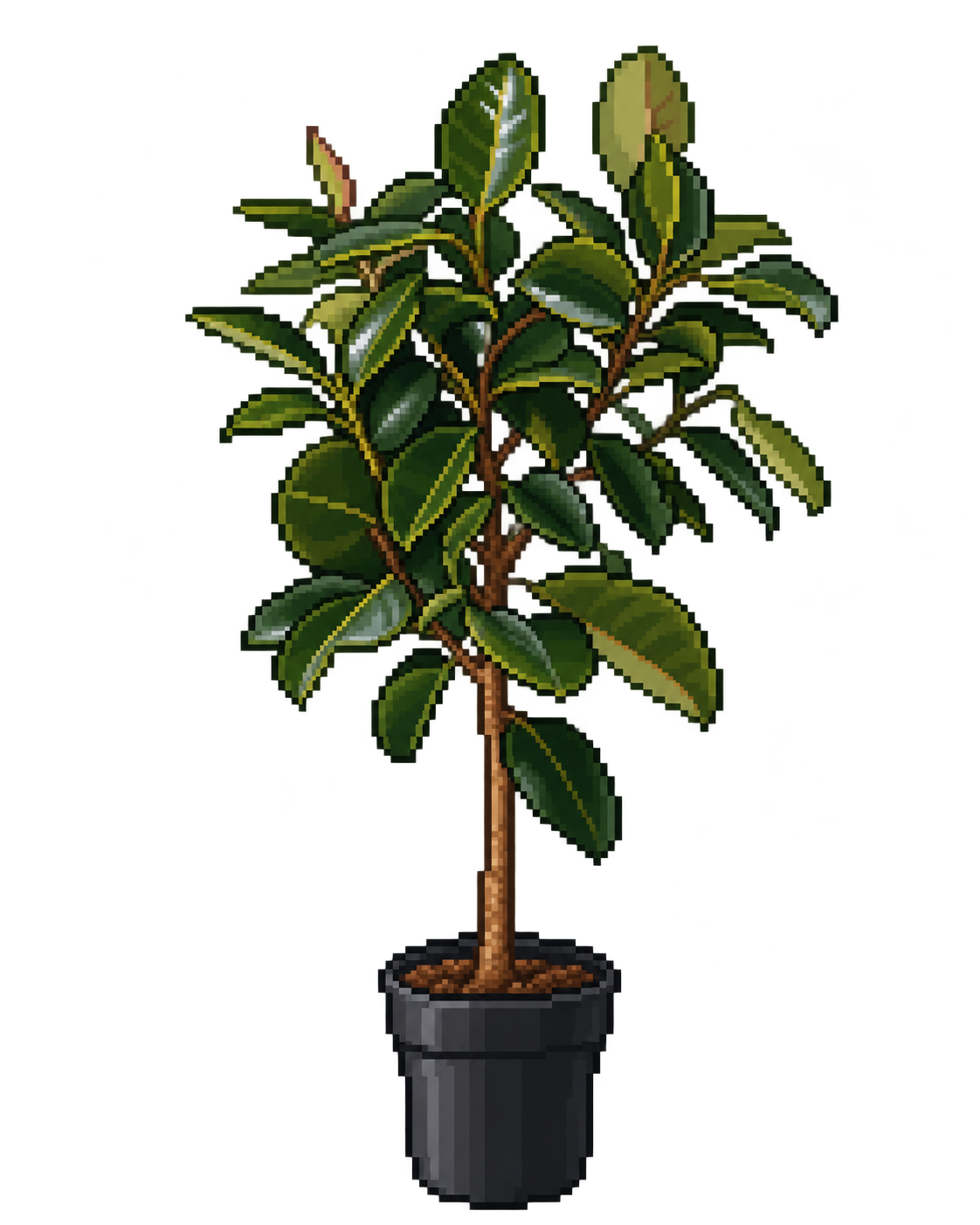
The leader in growth speed, but the stems were falling apart, so I tied them together. Now it looks like this:

Aloe vera (aka Вера)
- Wiki: Aloe vera
- From: tuincentrum.nl (*not exactly this one)
- Water: Once every 2-3 weeks, only when the soil is completely dry. Even less in winter. Rots easily if overwatered.
- Light: Bright light, direct sun is welcome. A south- or west-facing windowsill is ideal.
- Humidity: Low, 30-40% is fine. Dry air is not a problem.
- Toxic: Toxic to cats and dogs (saponins and anthraquinones in the latex under the skin), causes vomiting and lethargy.
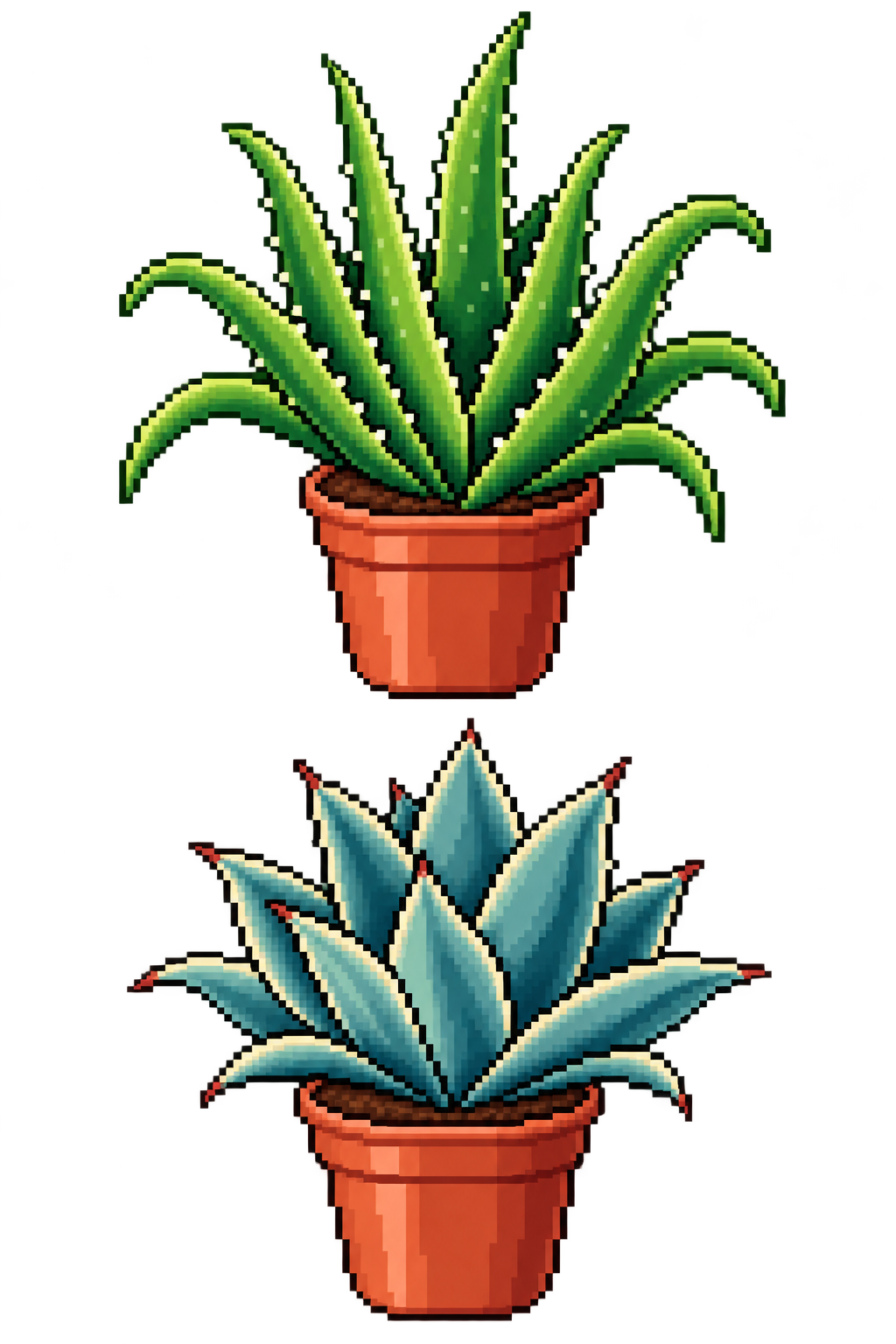
One thing about aloe and many about agave:
- Once a classmate brought an aloe drink to school. After that I wanted to try it so badly, for years, and I finally did only in the Netherlands. It’s tasty and refreshing, highly recommend.
- Narkoman Pavlik was wrong in the famous “Big Aloe” meme. Those are not aloe, they are agave! Agave is toxic, yet TEQUILA and MEZCAL are made from it. Agave belongs to the ASPARAGUS family (not cactus, lol). Agave is also monocarpic, which means it flowers only ONCE and then… DIES. Its flower stalk is 3 to 12 METRES tall and smells BAD, attracting its pollinators (опылителей): BATS.
Ficus benjamina (aka Бенжамин, aka Беня)
- Wiki: Ficus benjamina
- From: tuincentrum.nl
- Water: Once a week in summer, every 1-2 weeks in winter. Keep the soil slightly moist but never soggy.
- Light: Bright indirect light, some direct morning sun is fine. Hates being moved: a change of spot or a draught makes it drop leaves.
- Humidity: 50-60%. Likes misting in winter when the heating is on.
- Toxic: Mildly toxic to cats and dogs. The sap irritates skin and the mouth.
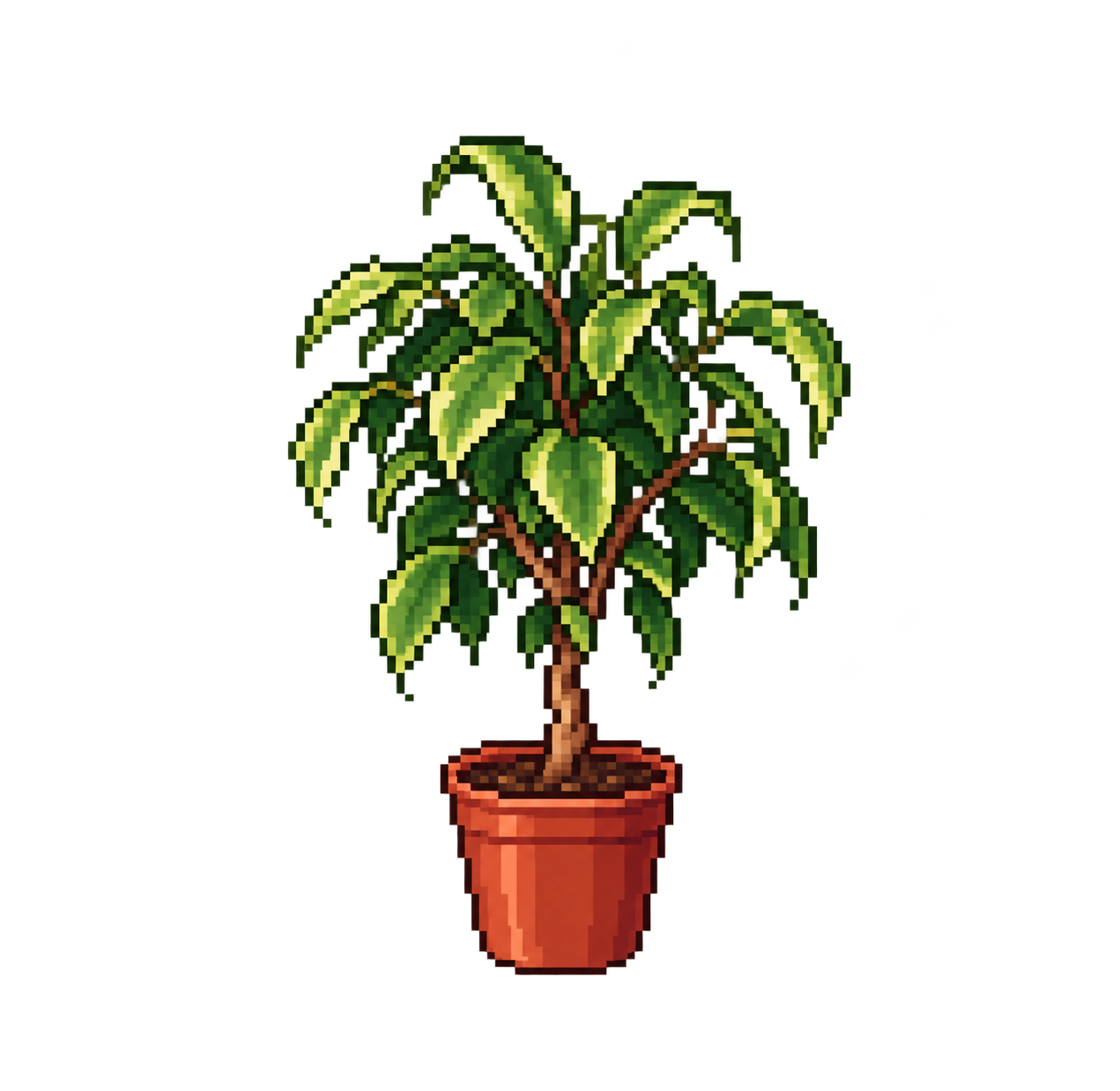
The smallest plant, and it probably won’t grow much bigger. Surprisingly low water consumption.
Anthurium andraeanum
- Wiki: Anthurium andraeanum
- From: tuincentrum.nl (*not exactly this one)
- Water: Once a week, when the top couple of centimetres are dry. Likes to stay lightly moist, not wet.
- Light: Bright indirect light. No direct sun, it scorches the leaves. Won’t flower in deep shade.
- Humidity: 60-80%, the higher the better. A bathroom or kitchen spot works well.
- Toxic: Toxic to cats and dogs (calcium oxalate crystals), causes mouth burning and swelling.
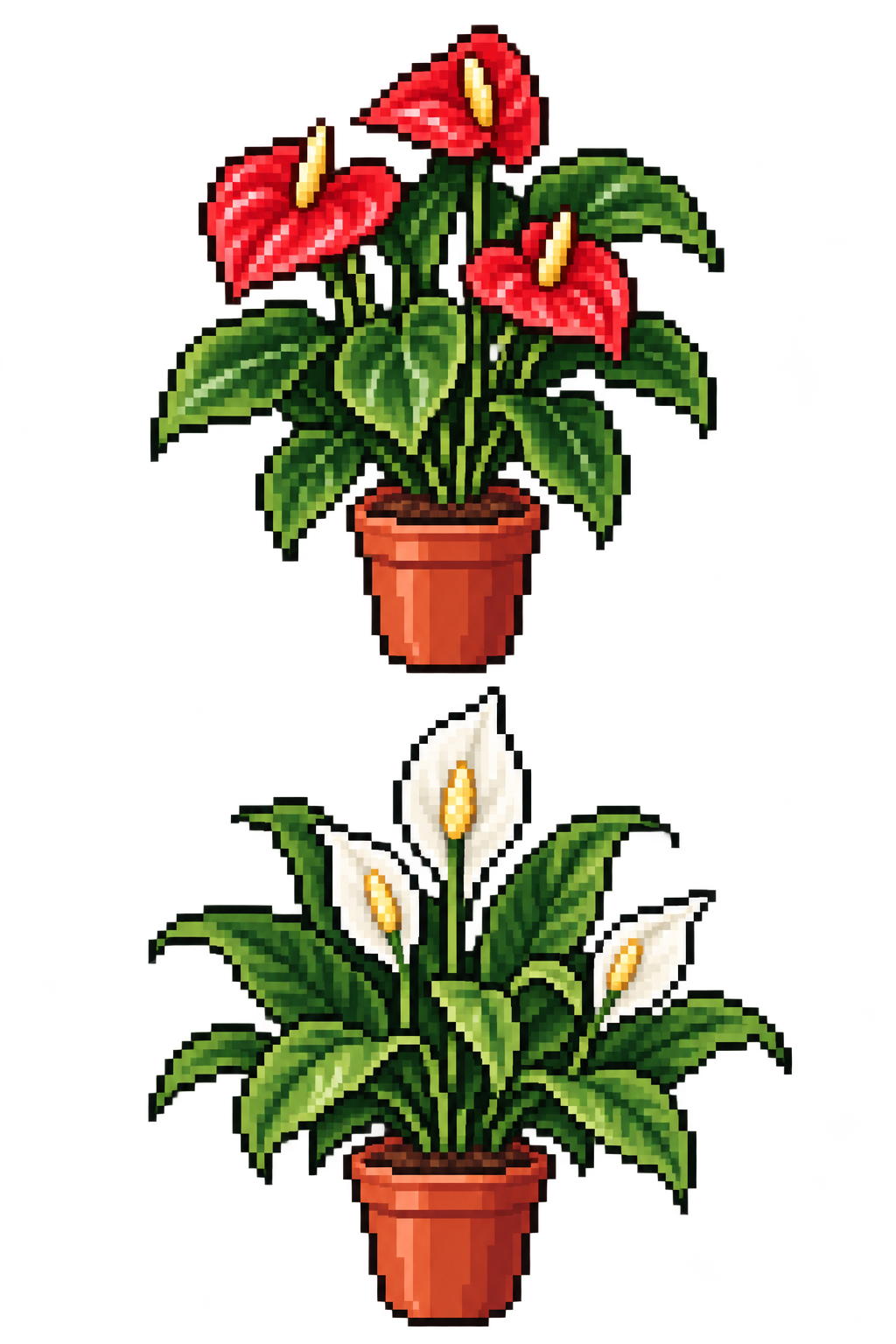
In Russian it’s called “мужское счастье” (men’s happiness), as opposed to spathiphyllum, which is “женское счастье” (women’s happiness). Inspired by Lera from Spain.
Dracaena trifasciata ‘Laurentii’ (aka Лаврентий)
- Wiki: Dracaena trifasciata
- From: A gift
- Water: Once every 2-4 weeks, only when the soil is fully dry. Once a month in winter. The easiest way to kill it is to water it too much.
- Light: Anything from low light to direct sun, but grows faster and keeps its yellow edges in bright light.
- Humidity: Low, 30-50%. Doesn’t care.
- Toxic: Toxic to cats and dogs (saponins), causes vomiting and diarrhoea.
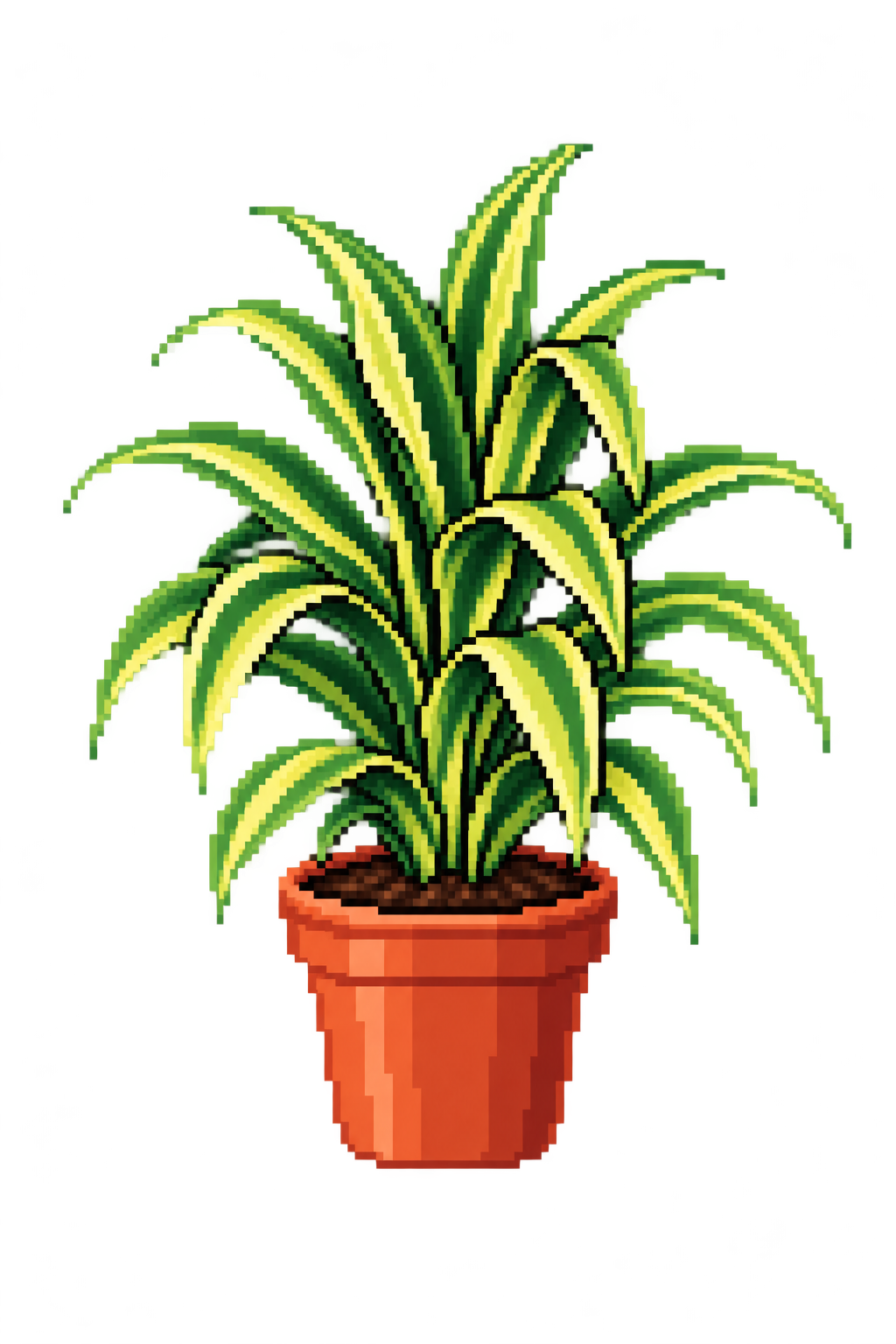
Known in Russian as “тёщин язык” (mother-in-law’s tongue) or “щучий хвост” (pike’s tail), and in English as snake plant. Masha, a friend and neighbour, gave me pups from her dracaena.
Avocado x3
- Wiki: Persea americana
- From: Grown from pits of supermarket avocados
- Water: Once a week, keep the soil evenly moist but never soggy. Brown leaf tips mean it’s too dry or the tap water is too hard.
- Light: As much bright light as possible, direct sun is fine. Stretches and goes leggy on a dark windowsill.
- Humidity: 50-60%. Likes misting in winter when the heating is on.
- Toxic: Toxic to cats, dogs and especially birds (persin in the leaves, pit and skin). The flesh is the only safe part, and only for humans.
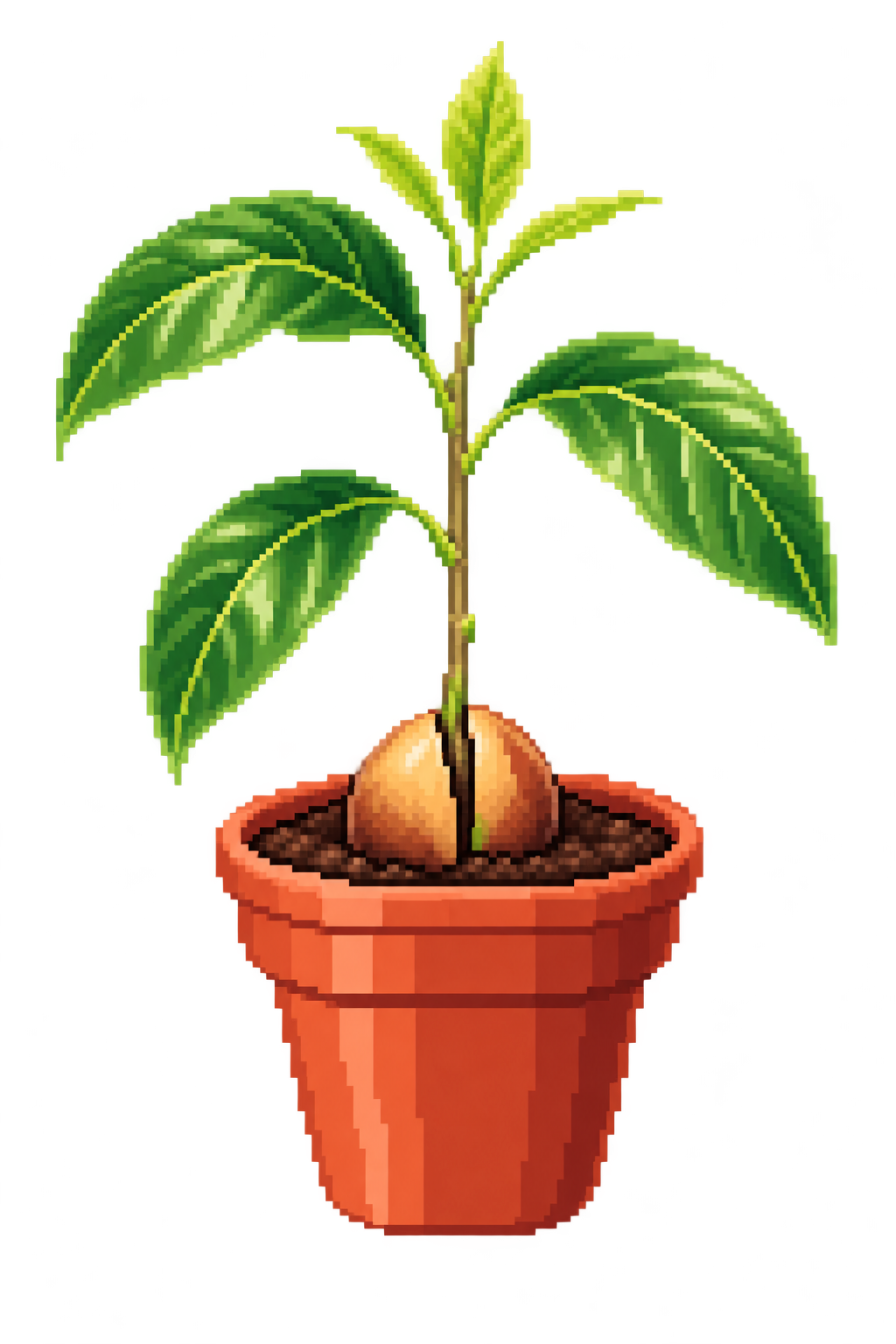
This was my 5th attempt to grow an avocado, and it finally worked out! The recipe: peel the pit (fruit seed), cut about 0.5 cm off its bottom, stick 3-4 toothpicks into it and rest it on a glass of water. Change the water every 1-2 days. On day 10 I got the first root, and on day 20 the first sprout.
Care notes
For all of these plants I use the same liquid fertiliser (удобрение), roughly every two weeks from spring to early autumn and not at all in winter.
One day we noticed a lot of tiny flies (fungus gnats, дрозофилы) hovering around the pots. They were annoying, so I bought white gravel on Amazon and covered the soil with it. The gnats lay their eggs in moist soil, and the gravel layer keeps them out. No flies so far.
That’s all about my indoor plants. The outdoor ones on the balcony deserve a separate post.
New words
Words I had to look up while writing this, in the style of my English posts:
frond- a large divided leaf of a palm or fern (ветвь с листьями)to unfurl- to open out from a rolled-up state, about leaves or flags (разворачиваться)pollinator- an animal that carries pollen from flower to flower (опылитель)fertiliser- a substance added to soil to help plants grow (удобрение)fungus gnat- a tiny fly whose larvae live in moist potting soil (грибной комарик, what we usually call дрозофила)pit- the hard seed inside an avocado, peach or cherry (косточка)sprout- the first shoot that grows from a seed (росток)